Saturday, November 5, 2022

Clear Cosmology - Introduction to the Elements v2.0

Compiler's Note: In a previous version of this article, we spent a great deal of text going over various elemental models that we weren't investigating and burying the lead, which is counter to the purpose of this article series. We apologize to anyone who read through that absolute mess.


THE ELEMENTS
Taking our first significant step into the abstract world of magical cosmology, we have opted to start at the ground level of material phenomenology. This subject should be something familiar to all readers: the four elements.

The four elements are an omnipresent motif in modern media. Earth, Water, Wind, and Fire serve as such a long-standing framework thematically that their use often degenerates into cliche. Whether the four elements are utilized with low conceptual resolution (Final Fantasy I) or with great care and attention (Avatar: The Last Airbender), many storytellers and game developers have found the model useful.

Despite the widespread and long-standing implementation of the four elements as an organizing model in fiction, our research has led us to regard this implementation as largely shallow, lacking in some of the model's most crucial features. Here, we want to demystify the four elements and maximize their potential as a tool for other writers.


THE PHENOMENOLOGY OF THE FOUR ELEMENTS
The four elements naturally map onto the four states of matter: solid, liquid, gas, and plasma.

EARTH/SOLIDS
Solids are typically opaque, dense, and heavier than the liquids or gases around them. The first point of reference for solids is the ground at their feet. On top of that, solid, opaque things were heavy and would fall down to other material of its kind. Therefore, nearly all solids were understood as earth or stone. 

WATER/LIQUIDS
All liquids flow over, down, and into the earth, seeking the lowest point. The first and most essential liquid is water. Therefore, all liquid behavior is framed by water. All liquids, regardless of their actual water content, can be categorized as a variety of water.

AIR/GAS
Gasses are thin and typically transparent to the point of invisibility. They are primarily perceived through physical contact: a gust of wind, a foul smell, a burning of the eyes. Visible gasses like steam, fog, or mustard gas flow up into the atmosphere, and even the dense gases coalesce over earth and water, resting above the lower elements. The most ergonomic way for the ancient man to summarize the entire gas phenomenon was by analogy of the air in his lungs.

FIRE/PLASMA
Controlled human interaction through ionizing, light-producing processes has been limited throughout our history to fire. It was the only means by which we could produce our own light, and our most significant light source was the sun, which burned our skin and heated the world. Naturally, we connected all light production to some variety of fire, as the fire was the only light source we could regularly and tangibly interact with. We also observed that flames rise upwards as though reaching for the lights in the heavens, which themselves appear to float upon the air.

The above descriptions seem straightforward enough, and in many works, they utilize most of these features to inform character, culture, and design. What are we on about when we say most models ignore one of the model's most crucial features?


ELEMENTAL VERTICALITY
The four elements describe a vertical hierarchy of superior-to-inferior elements.

(Diagram shamelessly copied from The Language of Creation)

We did not understand this until we read The Language of Creation: Cosmic Symbolism in Genesis by Matthieu Pageau. Pageau's book uses diagrams to describe the structure of biblical narratives and images and developed this model from Genesis 1, which represents the physical placement of the elements in the universe based on opacity and density.

Once we read this, we recognized the same model described in the Corpus Hermeticum, the body of Neo-Platonic texts that form the basis of the philosophy of Hermeticism, which in turn informed European alchemical and magical tradition. From the second book of the Corpus Hermeticum, Poemander, verses 6-7:

6. Then from that Light, a certain Holy Word joined itself unto
Nature, and out flew the pure and unmixed Fire from the moist
Nature upward on high; it is exceeding Light, and Sharp, and
Operative withal. And the Air which was also light, followed the Spirit
and mounted up to Fire (from the Earth and the Water) insomuch
that it seemed to hang and depend upon it.

7. And the Earth and the Water stayed by themselves so mingled
together, that the Earth could not be seen for the Water, but they
were moved, because of the Spiritual Word that was carried upon
them.

and 16-17:

16. And the Circulation or running round of these, as the Mind
willeth, out of the lower or downward-born Elements brought forth
unreasonable or brutish creatures, for they had no reason, the Air
flying things, and the Water such as swim.

17. And the Earth and the Water was separated, either from the other,
as the Mind would: and the Earth brought forth from herself such
Living Creatures as she had, four-footed and creeping Beasts, wild
and tame.

Anecdotally, this compiler has run into this model repeatedly in these texts, and the assumptions that come with this model are clear as day when one digs into magical tradition.

We'll refer to this model hereafter as the Hierarchy of Elements.


THE HIERARCHY OF ELEMENTS

Hierarchy? In my Cosmos?
We recognize why this feature has been under-utilized, as vertical hierarchies are tricky and often unfashionable. Many audiences would read "the superiority of fire" as a moral or value statement rather than a description of its normative spatial position. Why, if the Fire Nation in Avatar: The Last Airbender was given a model of the world that placed their inherited element closer to the stars, there'd be no convincing any of them they weren't rightful rulers of the world!

We recognize that Avatar's political and cultural considerations are not well-suited for this dimension of the four elements. However, Avatar is not the only story that can be told (or re-told) using these devices. Understanding the hierarchical nature of elemental phenomenology is essential to making an informed decision on whether to cut or incorporate. Regardless of your decision as a writer, it will most certainly be a decision after reading this.

Okay, so Hierarchy
This vertical hierarchy operates along the axes of density, opacity, animation, abstraction, and complexity, which are reinforced by the ancient notion of "like-attracts-like" (which can be directly observed as noted in the phenomenology of the states of matter).

(Diagram shamelessly refined from The Language of Creation)

EARTH
Earth is the densest material, composing the lowest point of our phenomenological reality. Earth falls to earth. Earth is opaque, too complicated for us to see through. Earth is the least animate and most feminine (generative) of the elements, passively generating stone, metal, and plant life. All other elements rest atop the earth.

WATER
Earth is less dense than earth but denser than air. Water flows together down to the lowest point it can reach. Water can be opaque, translucent, or transparent and possesses an opacity gradient at depth. Water is more animate than earth but less animate than air. Water acts upon earth, changing it to mud, facilitating chemical reactions, and instructing the plant seed to grow. Water is active on earth but passively conforms to the earth's shape where unchanged, and is brought to animation by the shaping of the wind which whips it into waves.

AIR
Lighter than water but denser than fire, air moves as if under its own accord. When it flows into a container (earth), it does not occupy the lowest point but instead the whole of the shape. When released, it escapes the earth and out of any liquid, up into the sky and out in all directions. It is usually transparent, more typically invisible, and far less complicated than earth or water. Air blasts stone and whips water but is compelled to move this way and that by the heat of fire.

FIRE
Fire is the lightest of the elements, the tongues of its flames not shooting outward into the atmosphere but reaching up to the celestial fires of the sun, moon, and stars. The inverse of opacity is not transparency, but the production of light and fire reveals and clarifies what is shrouded in darkness. Fire converts the complicated unknown into the simple known. Fire dances and imparts its animation to the other elements, changing the composition of earth, boiling water, and warming the air. Fire is the most masculine (shaping) element, forcing change onto the other elements, especially to the ends of an active human will. 

AETHER, THE FIFTH ELEMENT
The fifth element, aether, can be summarized as the principle of animation. The exact meaning of "animation" will be explored in its dedicated article, in conjunction with individual articles on earth, water, air, and fire (articles forthcoming).


VERTICAL SCARCITY

Is this Really Underutilized?
If Wikipedia is anything to go by, then yes! At the time of this writing, the verticality of the elements featured nowhere in the classical elements* article, which instead focuses on the interpretations of Aristotle and Proclus. While these are reasonably simple to understand, they don't translate well to a broader understanding of ancient cosmology, which was influenced heavily by the verticality of observed phenomena. 
The Aristotelian Model


The Proclean Model 

The dryness and relative temperature of the elements can have value in your narratives if that's how you choose to parse them. Still, the model needs to translate to an easily observed cosmic structure. This is how you get weird things like the plane maps from Dungeons and Dragons.

Unsure which sourcebook this map is from.

How do we read the orientation of the elemental planes? Is fire closer to the lower planes than the upper planes? Are they coequal with the material plane? What governs these choices of presentation? Without clear guiding principles, the subject is easily confused.

*While Wikipedia is far from an ideal source, it's suitable for broad strokes and can be used as a rough gauge of public knowledge on (uncontroversial) subjects. The fact that the vertical hierarchy needs to be included in this article speaks to the ignorance of the subject on the part of Wikipedia editors and, by extension, the public.


VERTICAL VALUE

Okay, So What?
The vertical hierarchy of the elements is missing from our media, so what? Other than some thematic features that a few authors might exploit, there only appears to be direct application outside the elements themselves.

This might be the case where the elements themselves are descriptions of the normative phenomena in the universe. When ancient peoples witnessed things that violated this simple model, what they perceived was not a failure of the model to describe the universe but instead an instance that transcended the model. In other words, they were looking upon something divine.

Transcendence of Boundaries and Magical Substances
One of the most important advantages of the hierarchical model is that it places the normative states of matter on a ladder that scales from concrete at the bottom to abstract at the top. Materials transcending these boundaries therefore bridge the concrete and abstract, allowing room for idea to become instance, and for instance to touch platonic ideal. These substances and devices that cross boundaries are a vector for magical action, allowing you to start from the four elements and into more derived materials as vectors for magical action. Quicksilver is celestial for its metallic qualities but behaves as a simultaneous manifestation of earth and water, the passive elements of generation. Sulfur is a stone that burns brilliantly and produces a powerful fumigant, revealing itself as a simultaneous manifestation of fire and air, the shaping elements.

We can even find magic in seemingly mundane substances, like pumice!


Magical Pumice
Pumice is a volcanic orthoclase feldspar that is lightweight, porous, and full of gas cavities. As a result of its low density, pumice can float on water. The properties of density and buoyancy are well understood today and were understood well enough in the ancient world that they could sail the seas. However, not everyone had ready access to this material, and the idea of a stone that floated upon the water unassisted violated the very definition of stone! This categorical disconnect led to the mystification of the material and fabulous stories of willful stones that floated upon the sea at night and hid themselves from the sun by diving into the depths during the day (a sort of story that would later be conflated with pearls).

This "willful stone" that acted on its own desires by floating was imbued with magical powers and, in the romantic tales of Alexander the Great, was one of many mystical stones the young conqueror was said to have used. Under the name "eldor," these stones were attached to the harnesses of his men's horses, enabling them to ambush their enemies in the Land of Darkness.

If this one little deviation from normative phenomenology can spiral into sentient stones and magical powers, you have a framework that creates windows for magic constantly! The elements stop being boxes that you have to write within or bones you have to work off of, but a toolset that can bring to any instance to reinterpret mundane material into an opportunity for dramatic action!


TAKEAWAY
The hierarchy of elements not only serves as an organizing principle of cosmology but also as a valuable tool for the reinterpretation of all matter. They are as grand as the fixed structure of the cosmos and as versatile as any tool you carry in hand. The model is dynamic and naturalistic and leaves plenty of room for writers to refocus, reframe, and reinvent old relationships. 

Our future articles on the elements will explore the numerous ideas tied to the individual elements and the creative possibilities to be found there, and articles on transcendent materials are likewise forthcoming.


BIBLIOGRAPHY

Wikipedia

Classical Element.” Wikipedia, Wikimedia Foundation, 23 May 2022, https://en.wikipedia.org/wiki/Classical_element.

Texts

Lecouteux, C. (2012). E: Eldor. In A lapidary of sacred stones: Their magical and medicinal powers based on the earliest sources (p. 137). essay, Inner Traditions.

Pageau, Matthieu. “Chapter 11.” The Language of Creation: Cosmic Symbolism in Genesis: A Commentary, Manufacturer Not Identified, Columbia, SC, 2018, p. 40.

Trismegistus, Hermes. “Book II Poemander by Hermes Trismegistus.” Magick Books Library, https://darkbooks.org/pp.php?v=1018287740.


Tuesday, May 24, 2022

Creature Feature - Milk Thieves

  Milk thieves are a category of witches familiar in the folklore of Scandinavia, naturally in service to the milk-stealing witch referred to as a caillebottière

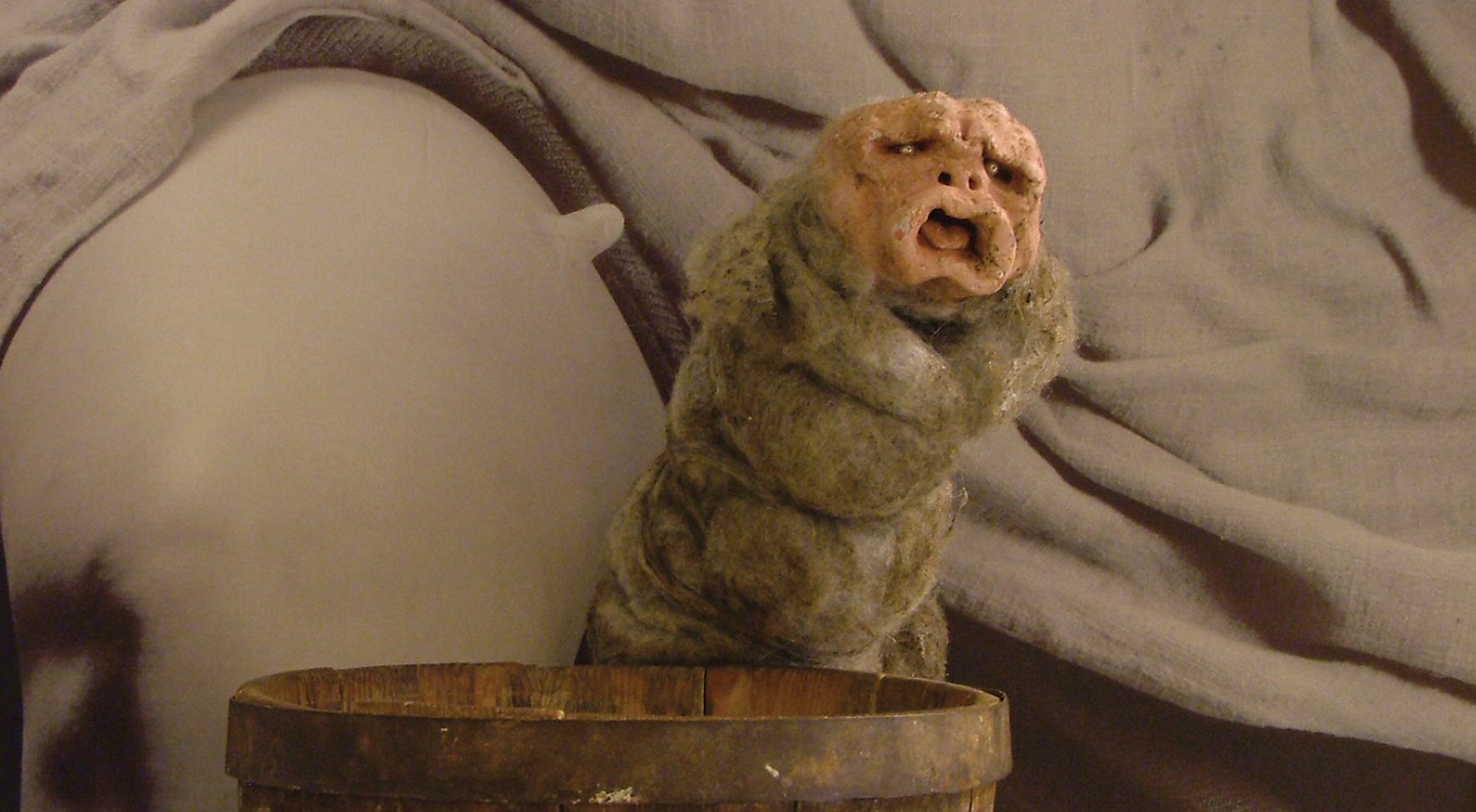
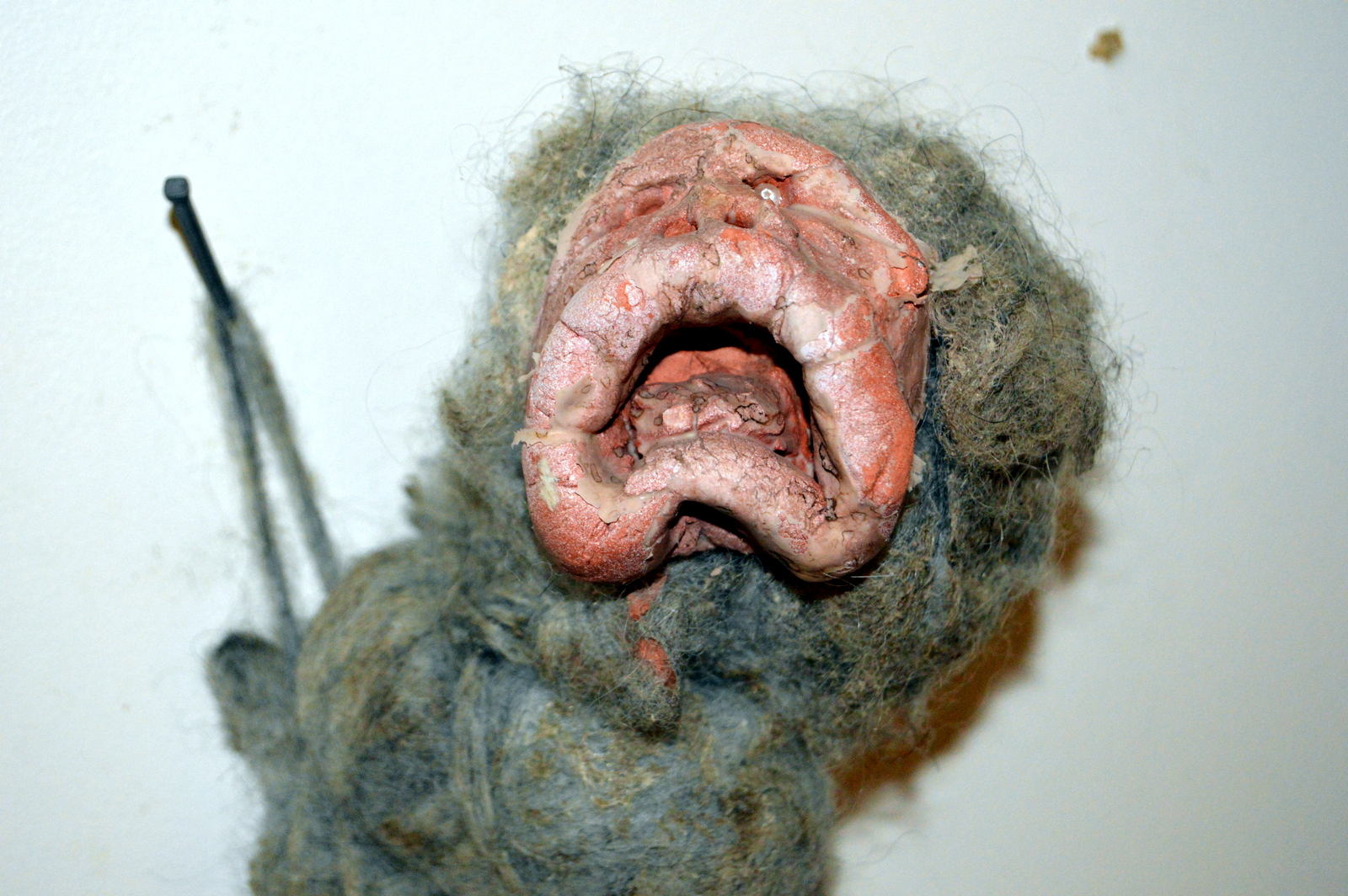
Regardless of species, each milk thief is a profane amalgamation of human integuments like hair and nails, animal effluvia, wood shavings, body parts, and other offensive materials.

Brought to life by sorcery and other blasphemous action, these foul constructs would go forth and suckle from the teats of the neighbors’ livestock or from their milk jugs or even break into homes to lap up cream before returning to the witch’s pail or trough to regurgitate the stolen milk.

The Swedish Milk Hare

MILK THIEF DIVERSITY 

Milk thieves possessed several forms and names, including the milk rabbit, milk hare, and troll ball. Still, two, in particular, seem to have the most lore associated with them (based on this compiler’s limited resources on the topic). These are the troll cat and the tilberi.


THE TROLL CAT
The troll cat goes by many names: truss, skratt, smørkat, trollnøste, trollnøa, etc. It comes in two shapes, the most common being a ball, the other being a cat. 

Troll cats with these different shapes operate under different rules: the ball of yarn will roll around to absorb the milk, and injury done to it would cause it to rupture and spill its contents; the troll cat in the animal shape will sympathetically wound its witch via magical sympathy.

This difference in form comes from two influences: the physical phenomena conflated with milk thieves and the plasticity of magical concepts.

First, the dual forms of the troll cat are suspected by some anthropologists to be influenced by either hair vomited up by cattle (the ball) or by the Norwegian Forest Cat (the cat form, obviously). The second influence has to do with Scandinavian notions of the structure of the self, particularly the notion of hug.

Hug is the mental or perhaps sidereal self in Scandinavian mythology. Like many such notions, it’s impossible to pin down concrete boundaries for what the hug is other than an immaterial extension of the self that is not quite the soul or spirit, capable of influencing animate and inanimate objects at a distance. Relevant to the troll cat, the witch’s hug sometimes takes the form of a cat. Additionally, the witch must be buried with her troll cat, or she might leave the grave looking for it.

Because the zoomorphic troll cat has been conflated with the witch’s hug, the constructed familiar and the witch don’t have a clear boundary between them. An attack on the zoomorphic troll cat directly attacks the witch herself! 

While the troll cat serves as both a gateway to Scandinavian magical concepts and a holotype for the entire category of milk thieves, it cannot match the next milk thief in dramatic impact: the tilberi.


THE TILBERI
Initially, this whole article was dedicated to exploring Iceland’s tilberi, the foul spindle’s novelty so overpowering that this compiler spared only a handful of lines for the other milk thieves. Given what’s described here, we think you’ll understand.

To Make a Tilberi

If a witch desires to make a tilberi (carrier) or snakkur (spindle), she must wake up early on Whitsunday (Pentecost) and dig up the grave of the recently deceased. She shall remove a rib from this corpse and use it as a spindle for grey wool stolen from a widow’s sheep. For the next three Sundays, the witch will spit the communion wine onto the wool spindle, and it will come more alive each time. 

On the third Sunday the tilberi is realized: a woolly snake or worm with grotesque, human-like faces at either end. It latches onto a wart that develops on the inside of the witch’s thigh and suckles there until ordered out.

Addendum: After publishing, we realized that the element of communion wine was worth examining further. There's more to this than the substantive blasphemy of rejecting communion thrice (the number of first substance), but also in what the communion wine represents: eternal life. If the blood of Christ can confer immortality to humans, surely it can confer life unto the inanimate and unliving!

Tilberi Activity
Writhing and wriggling, the tilberi is ordered by the witch to go out and steal the milk and cream of her neighbors. Full, it returns to the witch’s pail, crying, “Mummy! Mummy! Belly’s full!” and disgorges the ill-gotten milk into her pail or churn.

The tilberi obtained the milk by assaulting livestock, leaping onto the back of a cow, goat, or sheep and latching on to the teats. Sometimes, they were able to reach around both sides and attack two nipples at once.

Tilberi Hazards
The tilberi is a perversion of motherhood, a creation that exists only to parasitize the community for the sake of the witch’s gluttony. This poses a problem for the witch, as the ordinary course of human biology threatens her life. If she were to give birth without disposing of her tilberi, the familiar would latch onto the witch’s own breasts and suck the life out of her!

Disposing of a Tilberi
The tilberi, as far as this compiler has been able to ascertain, has no conflation with the concept of hug, which is to say that the tilberi is its own entity distinct from the witch. This means that the witch can dispose of the tilberi without damaging herself.

The witch can destroy the tilberi by giving it an impossible task. It can be told to collect all the sheep’s droppings in three fields or gather all the droppings in the mountains and stack them into three piles. Either of these gets the tilberi far away from the witch who created it, and it will work itself to death or be destroyed by the holy power of three (in reference to the Christian Trinity). Regardless of what kills it, this task reduces the tilberi to a rib spindle.

Protecting oneself from a Tilberi
For the folk afflicted by the witch-thief, protective magic is available for protecting livestock against her foul familiar. One makes the sign of the cross over the animal’s rump and udder and then recites a psalter over the animal’s spine, preventing the tilberi from mounting or latching. 

This magical ritual may protect the livestock but does little to stop the witch. To do that, the witch must be identified.

Identifying a Tilberi’s Witch
The first way to identify the tilberi’s witch is by investigating the community members’ butter. Butter made from the tilberi’s disgorged milk is supposedly rich in taste but visibly clumped, as though curdled. 

Once clumped butter is found, either the sign of the cross is made over it, or a stave known as the smjörhnútur (“butter-knot”) is drawn in the butter with a finger. If the butter melts away into a foam from either of these actions, it’s a sure sign that the source milk was stolen.

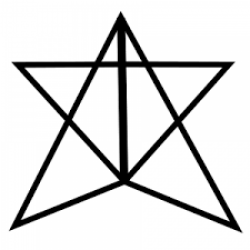
The smjörhnútur.

Alternately, they can also be identified by the cheese spell.

Still, the surest way to catch the witch is to catch her with the tilberi. Tilberi are quite fast, but if one chases a tilberi on a swift horse, they may drive it right back to its witch. Jacqueline Simpson identified several recorded instances of this in Icelandic Folktales and Legends, where the tilberi was tracked to the source and sought refuge under the witch’s skirt. In these instances, the women had the bottom of their skirts tied shut, trapping the tilberi, and witch and familiar were then put to the flame.


TAKEAWAY
This blog aims to make magical concepts, practices, materials, and creatures sensible to writers. For all its grotesque pageantry, the milk thief is an excellent device for putting the writer or their audience into the shoes of the people who told these tales.

For the modern writer, as much as the reader, it’s easy to be divorced entirely from ancient or medieval sensibilities. The notions of spells based on cheese or witches stealing milk seem silly to us because we live in a time of abundance like none other in the history of the world. We’re mostly divorced from the practice of animal and plant husbandry for sustenance because we’ve outsourced the task to industrial farms and supermarkets. The witches and their milk thieves, for all their apparent absurdity, tell us how vital dairy was for the survival of the common folk in these times and how close they were to the source.

To a modern American (at the time of this writing), a pail of whole milk is $20. Until the past couple of centuries, for some people, that pail was the margin that determined whether their children made it through the winter.

On top of the importance of calories, there’s also the question of trust. For most of human history, the overwhelming majority of the population has not been faceless bodies shifting from clique to clique in urban environments. They’ve been living in villages out in the countryside. They were bound by various means to the land they worked on, and therefore to a relatively small social circle, and were required to support themselves and their families and reciprocate labor with their neighbors. There were no police officers, what laws there were were hard to enforce, and it was necessary to depend on your community to survive. That dependence hinged on a fragile trust. Anything that sowed mistrust spread paranoia or undermined that trust wasn’t an attack on a single person but the entire social order.

Is it any wonder that such revolting things as the toll cat and tilberi came to be associated with the petty thief and the witch? These familiars were shaped by the disgust and contempt for those subversive social elements who would steal food from the mouths of children and turn neighbor against neighbor. That milk theft was an act that threatened the whole community for the selfishness and gluttony of a single person. 

These are the values of the agrarian folk, their sense of right and wrong dramatized in and framed by their material culture. Material culture matters to your character: what their food is, its availability, and how dependent community members are on that fragile social trust. Don’t neglect this in your world-building!


ON SOURCING AND FUTURE RESEARCH
Our starting-off point for researching this article was the relevant Wikipedia articles (as displayed in the Bibliography). While this is far from ideal, the articles are about non-controversial topics and can be regarded as good faith if not prima facie reliable. Some of the article’s sources have provided an excellent place to investigate related concepts, as in Alver’s Nordic Folklore: Recent Studies.

A cursory skimming of Kvideland’s book tells this compiler it’s an excellent resource for expanding on the hug/hugham concept, as well as the particulars of Scandinavian caillebottières and other witches, as well as a host of additional helpful information such as Finnish belief about the relationship between silver and the undead. All of this will need to be revisited in future blog entries.

An additional observation of these works is that many of the sources have been compiled by the same people. Alver wrote Nordic Folklore with Kvideland, Sehmsdorf, and Simpson, while Scandinavian Folk Belief and Legend was written by Kvideland and Sehmsdorf. Also referenced is one of the few books of Claude Lecouteux’s that this compiler has yet to purchase!

The world of folklore and magical studies is a relatively small group of people who produce an absurd amount of content.


BIBLIOGRAPHY

WIKIPEDIA

-“Hug (Folklore).” Wikipedia, Wikimedia Foundation, 29 Dec. 2020, https://en.wikipedia.org/wiki/Hug_(folklore)

-“Tilberi.” Wikipedia, Wikimedia Foundation, 5 Dec. 2021, https://en.wikipedia.org/wiki/Tilberi

-“Troll Cat.” Wikipedia, Wikimedia Foundation, 28 Dec. 2021, https://en.wikipedia.org/wiki/Troll_cat


SOURCE TEXTS

-Kvideland, Reimund. “Concepts of the Soul in Norwegian Tradition.” Nordic Folklore: Recent Studies , Indiana Univ. Pr., Bloomington U.a., 1989, pp. 119–120. 

-Simpson, Jacqueline. “Black Magic.” Icelandic Folktales and Legends, Tempus, Stroud, 2009, pp. 173–174. 

Spell Spotlight - The Cheese Spell

  When this compiler decided to start a blog, he was at a loss as to where to start. The subject of historical magic is both broad and plastic, operating most often in complete defiance of systematization. Magic is weird, wonderful, and deeply frustrating for anyone seeking a unifying logic. Even when confined to the comparatively narrow study of European and Mediterranean practice, magic is wildly diverse, informed as much by high-minded philosophers and theologians as by charlatans and the intellectually incurious.

This compiler’s first impulse is to examine the cosmological structure of ancient and medieval peoples. Their notions of what enabled magic to work were predicated on a combination of received wisdom from their forefathers and their own natural observations of natural phenomena. To use the archaic definition of the word, these form the dogma of magic, the Greek for “something that seems true.”

Dogma poses too many problems as a starting point, not least of which is the unfashionable nature of the term. Even when one ignores the distaste of the language, there is a high risk of alienating potential readers by bombarding them with too many high-level abstractions too quickly.

Something smaller may work better, something less totalizing. Magic has no shortage of curses for petty sleights, ill-conceived recipes, or embarrassing misunderstandings. Hell, these subjects themselves warrant their own exploration as demonstrations of human creativity, depravity, and even willful ignorance!

Wait, no, that’s still too abstract. The starting point needs to be something concrete, something…relatable. Something human. Maybe even something a little…cheesy.

The Cheese Spell
The cheese spell is a shockingly common operation in European magical tradition. It appears no less than eleven times in Claude Lecouteux’s Dictionary of Ancient Magic Words and Spells: From Abraxas to Zoar

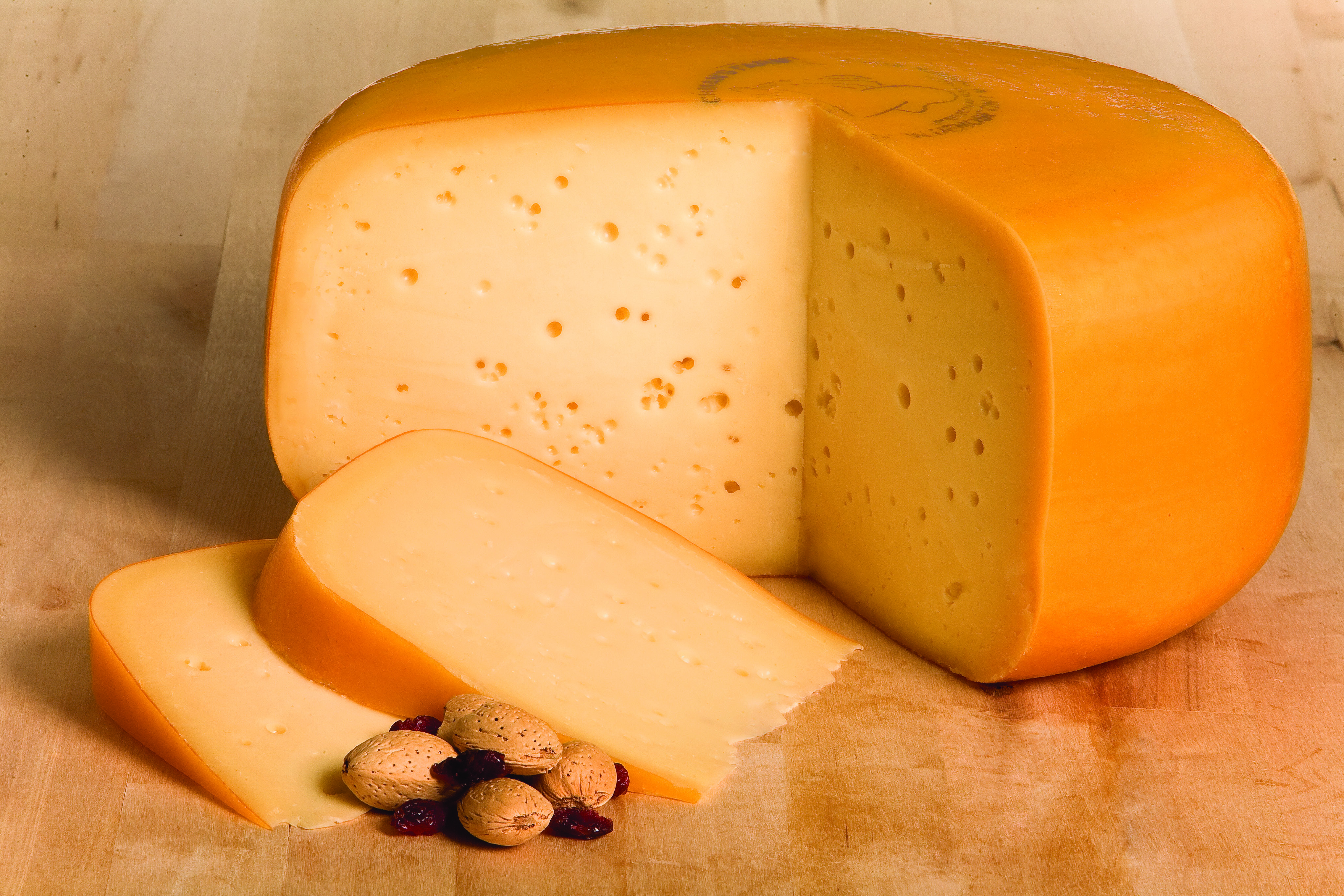
The basic structure of the spell is uniform: the caster believes someone to be a thief; they enchant a piece of cheese and serve it to the suspect; if the suspect is unable to eat the cheese, then they are confirmed to be the thief.

Digging Deeper
This all appears to be simple, straightforward, childish even. Just feed a thief some cheese. What can be gleaned from something this petty?

Quite a lot, actually! The magical record tends to be rather sparse on details, and when an author deigns to elaborate, it often contradicts the descriptions of the same or a similar spell in other texts. Different people prioritize different things. Different cultures or even the same cultures at different times have different values, framings, and conceptual languages. What may have been glaringly obvious at the time of penning, like food preparation procedures, may be opaque to the modern reader.

The cheese spell itself has several vectors of ambiguity: where cheese, why cheese, how cheese, how not cheese, and who cheese.

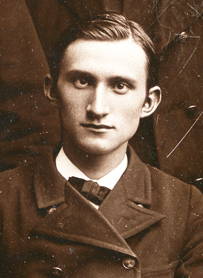
Anton Christian Bang (1840-1913)

Where Cheese?
The cheese spell was a popular spell from Scandinavia. We know this because at least eleven variations survive, all compiled for posterity by three people.

The first was Norwegian politician and historian Anton Christian Bang in his work Norske hexeformularer og magiske opskrifter (“Norwegian hex forms and magic recipes,” 1901). The second was Danish folklorist Ferdinand Orht (1873-1938), in his two-volume work Danmarks Trylleformler (“Denmark Spells,” 1917-1921). Finally, American folklorist Mary S. Rustad found two handwritten grimoires in an old attic in central Norway and published them as The Black Books of Elverum (1990).

Ferdinand Christian Peter Orht (1873-1938)

Why Cheese?
There are several reasons that cheese would be a suitable medium for spell delivery. First, is that cheese is food. Food is served in the domestic space. Theft of the nature alluded to is a violation of the domestic space. In this sense, the caster is catching them repeating the act of taking. 

But you might be asking yourself, if the mechanical concerns of the operation are tricking someone into accepting food they cannot eat, wouldn’t any food do?

Well, yes, yes, it would.

Bread features in at least two variants of this spell: one in the French Les Oeuvres Magiques (“The Magical Works,” 1744), attributed to Heinrich Cornelius Agrippa and Pietro d'Abano, and another in the German Die kirchlichen benediktionen in mittelalter (“The Ecclesiastical Benedictions in the Middle Ages,” Vol. II, 336, 1909), compiled by Catholic theologian Adolph Franz.

In Les Oeuvres Magiques, one writes Omax Opax Olifax on a pancake. In Die kirchlichen, one writes Saraioua or Sarson on a crust of bread, and Saraphael or Sampson on a piece of cheese, and the thief shall be able to eat neither. We even see bread used in the spell cataloged by Orht with the invocation Habere Dabere Sachere!


Heinrich Cornelius Agrippa von Nettesheim (1486-1535)

But Why Cheese?
Okay, we’ve gone over the plasticity of the chosen medium. Bread would work perfectly for such a spell, just as bread serves as a medium for many other spells. Is there any reason cheese appears to be the favored vehicle for this spell?

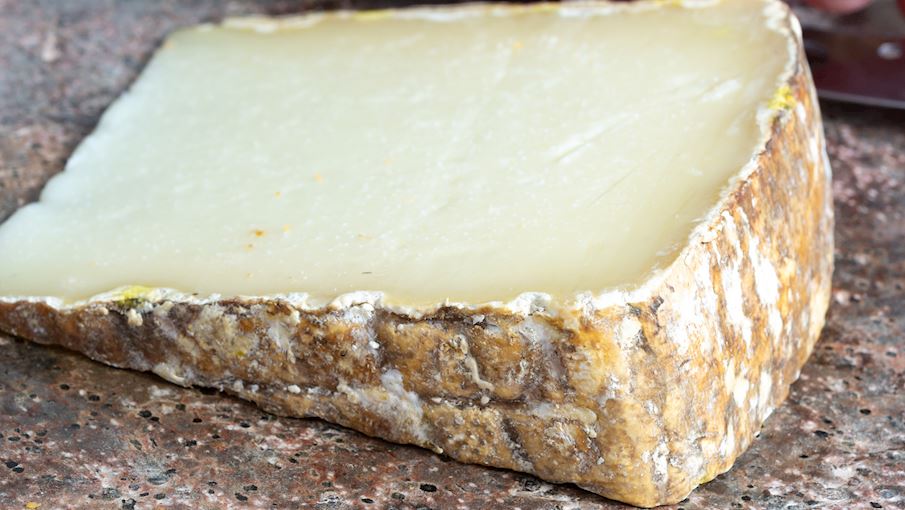
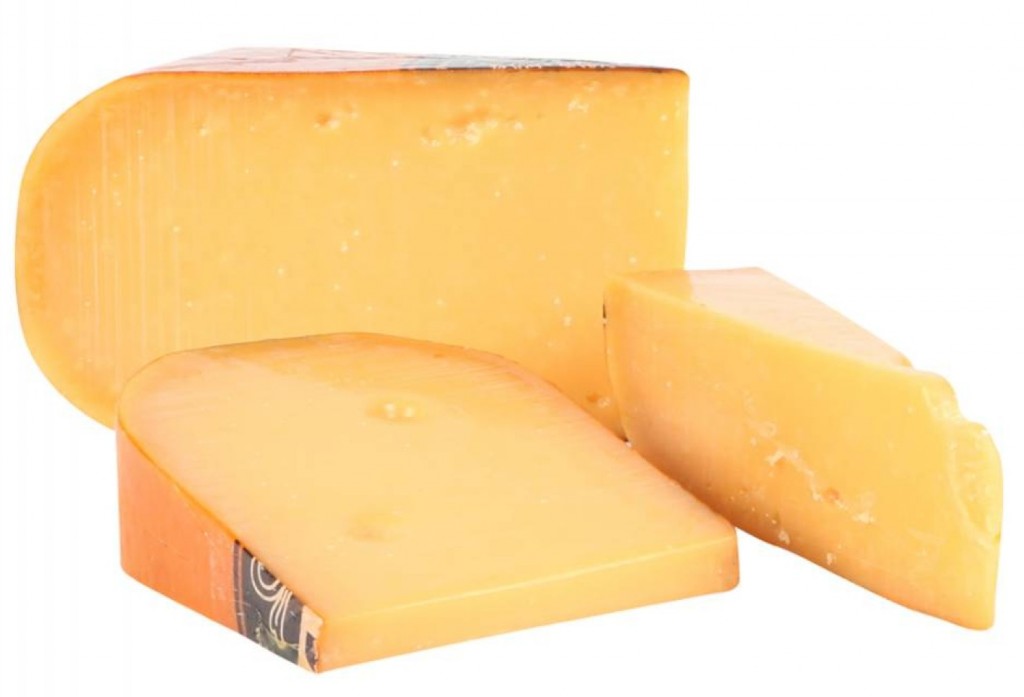
Well, this spell was most popular in Northern Europe. Gouda, Gulost, and Nøkkelost are available for this spell, among others that hold their shape well, making them a preferable support medium for script. On top of that, what Scandinavian doesn’t love cheese?

How Cheese?
This covers three topics: the cheese preparation, the enchanting method, and the words.

First, only one spell calls for specialized cheese preparation before casting the spell. In the case of the MAX PAX FIRAX variant discovered by Mary Rustad, for three Sundays in a row, the "Our Father" must be recited over the cheese without saying “Amen.” Thus “sanctified,” the cheese is ready to receive the spell. Whether the other variations required similar sanctification remains unclear.

    It was the habit of magical scribes to neglect the contextually obvious and to omit knowledge already expected of the initiate. We see a similar trend in medieval engineering texts: they tell the reader not to bother with the described machines if they cannot make a clock. 

    Another consideration is that practitioners often had the exact same problem we do: copying texts from hundreds of years prior, oblivious to the context of those works. This would have been a significant problem if the work had been recovered from a grave or cache, where it may have been preserved for centuries. Under such conditions, a tradition of instruction is broken and is revived by a reader who may not speak the language of the text fluently.

Enchanting sometimes involves spoken conjurations, as in Ohrt I, no. 949:

“I conjure you, X, if you are guilty, by the one God, by the holy God, and by the preceding names, to not eat this cheese!”

The other option is to write on the cheese. The practitioner might write on the cheese with their finger, leaving no mark. They might literally write on the cheese with a quill and ink. In the case of the signs of Bang, no. 1146, the words are carved into the cheese.

Finally, the magic words themselves. In alphabetical order:

-AGULA IGULA AGULET - written
(Ohrt I, no. 952)

-ANUOLL, AORDA, LABORO DOLOR PAUPERTIN. GIAM TUAM - written
(Bang, no. 1144)

-ELOY † TETRAGRAMATHON  † MESSIAS † OTHRES † YSKIROS † - written
(Ohrt I, no. 949)

-FOR FROE NOBALUTZ EST - written
(Bang, no. 1145)

-HABERE DABERE SACHERE - written
(Ohrt II, 97, 104, 123)

-MAX PAX FIRAX URGUX EXQEIDAX ARARE-LINGSTRAM TUAM FASIE DOLORE † - written
(BBE, 63)

-NEGUBA EXGVEDIA ARRARO FINTE AM TUAM TASIE DOLLORE - written
(BBE, 63)

-OMAX OPAX OLIFAX - written
(Les Oeuvres Magiques, 82)

-P ++ M COGA ♓︎ III - carved
(Bang, no. 1146)

-PAX † DAX † † EMAX ††† - written
(Bang, no. 1058, 1060, 1061, 1062, 1063; actual entry unsure, don’t speak Norwegian)

-PAX POX BIZAX - written
(Bang, no. 1058, 1060, 1061, 1062, 1063; actual entry unsure, don’t speak Norwegian)

-RABUN RATTACU FLUXA MAX PARVENECH - written
(Bang, no. 1065)

-SARAIOUA SARAPHAEL - written
(Franz II, 336)

-SARSON SAMPSON - written
(Franz II, 336)

How NOT Cheese?
What is actually supposed to be preventing the suspect from consuming the cheese? There are several possible mechanisms. In the case of Ohrt I, 949, God is supposed to directly intervene, barring the thief from the cheese. In other variants, it is conjurations of angels, demons, saints, or biblical patriarchs. Some of these sequences, however, contain no names or conjurations, leaving the mechanism a property of the spell itself rather than an act of theurgy or sorcery.

Perhaps the cheese cannot be eaten because of an outstanding debt, the debt owed serving as a physical barrier to consumption. Maybe the cheese refuses to be consumed, knowing itself in the mouth of a shameless thief and unwilling to feed the unrepentant sinner. Perhaps the ink the spell is written in just tastes terrible.

Which brings us to another point: how is the suspect “unable to eat?” Some variations record that the thief will spit the cheese out, but others are more evasive, leaving room for the thief to refuse to pick the cheese up from the plate because of a foreboding feeling or even choking on the cheese.

Who Cheese?
What is a thief?

A silly question, right? Isn't a thief someone who steals? Well, it’s not that simple, as the term appears to have significant crossover with another social malefactor: the Witch.

In the Middle Ages, a common witch was the milk-stealing variety, labeled a grating in English and caillebottière in France. In fact, Mary Rustad found a spell in The Black Books of Elverum that must refer to this permutation of the witch. BBE, 13 contains a ritual intended to reveal the identity of the individual who bewitched the caster’s animals, including the words Hosala Diesla Euga. This compiler does not have access to a copy of Rustad’s findings, but given the plasticity of magic, it wouldn’t be surprising if those words were used in a cheese spell.

The most dramatic manifestation of the caillebottière is, conveniently enough, fundamentally Scandinavian: the witch-made milk thief

Extracting Value
The above dissection is sufficient to inspire many writers, but this compiler would feel derelict if he did not expand these observations. A writer could take many directions at any step of this spell, and it would be a crime not to highlight them.


Value of Where
This compiler hadn’t put together that this spell was so heavily biased towards Scandinavian sources until this Spell Spotlight was in process. Being mainly dependent on secondary sources for the broader practice of magic, much of this compiler’s research has been based on the published works of Claude Lecouteux. Having engaged in my first foray into his extended bibliography, this serves as an excellent starting point for identifying specific authors and, by extension, specific regional practices. Recognizing Bang, Orht, and Rustad in Lecouteux’s Dictionary allows for immediate regional placement and, by extension, the ability to map relations with other spells.


Value of Why
The material for magic need not be expensive or exotic. People are biased towards their own material culture and are more than willing to substitute what is available instead of paying out the nose. This calls for authors to be familiar with the material culture of their characters: what food is available, what are the local woods, what is the local industry, and what does everyone have to work with?

While exotic and expensive materials appear, folk spells use folk materials to solve folk problems.


Value of How (Preparation)
There’s some ambiguity about why three Our Fathers might be spoken over the cheese without the final “Amen.” This compiler’s first impulse is to read it as an act of blasphemy. There’s no end of blasphemy in Western folk magic, intentional or otherwise. Perhaps it’s of the blasphemous stripe of using names of God for petty purposes instead of, say, reciting the Apostle’s Creed backward?

The function of Our Father is to ask God for spiritual sustenance and forgiveness, to extend forgiveness to others who have wronged the petitioner, and then to confirm the petitioner’s conviction with an “Amen.” The absence of the confirmation thrice means its lack is substantive.

This could mean, “I substantively refuse to forgive the thief.” It could be leaving the unuttered “Amen” hanging, the prayer unfinished, as if to say, “Forgiveness is denied so long as the trespass remains unreckoned.” The caster may even do this to negotiate with God, saying, “This theft cannot be forgiven until something is done about it.” Given the appeals to God and patriarchs found in these spells, the softer interpretations may be as likely as the Satanic interpretations.

These ambiguities are an excellent vehicle for characterization.

Value of How (Enchanting)
The caster's method and chosen words can tell a lot about the character. 

For those who place primacy in the spoken word, this could mean they prioritize the utterance, infusing the spell with life by their own breath. It could mean they expect supernatural intelligences to hear them and act on the caster’s behalf. Perhaps giving voice to the spell is a bet on the caster’s honor.

Writing presents several options as well. Those who write on the cheese with their finger prioritize acting the words out to impart animation to the spell. 

With quill and ink, inscribing the words writes the intentions into the cheese. The ink could also be used to make the cheese unpalatable, with the spell as a framing device to set the target up as a thief by exploiting a shared superstition. 

Carving entails an element of violence, using a knife to cut the spell's words into the cheese. This may be done because it’s just the first thing the caster thinks of, or it could be used to imbue the cheese with the intent of violence at worst or righteous retribution at best. Of course, someone would spit out or choke on a piece of cheese that wants to hurt them!

Value of How (Words)
The words spoken over, written on, or carved into the cheese can tell us much about what the caster believes they are doing or what they might be unwittingly doing, depending on the writer’s intentions.

Like many iterations of similar spells, the active magical words are a smattering of divine names, names or signs of spirits, references to gestures, broken Latin, and words employed for their sonorous quality (they sound magic!).

Of the latter, we see Dax, Max, Pax, and a host of other -ax/-*x magical words. These are vox mystica, words that have no inherent meaning but confer magical potency. They may be more recognizable by another technical label: mumbo jumbo. Anyone studying the topic will run into these sorts of words regularly. This particular sequence is also an excellent example of a popular magic syllable/suffix.

PAX † DAX † † EMAX ††† contains, obviously, three sets of crosses, starting with one and increasing by one with each set. Typically, this is an indication that the caster is to cross themselves. Someone familiar with a practice like this would know. Still, someone completely uninitiated might instead include the crosses in the written script or vocalize their interpretation, such as “By the cross!”

P ++ M COGA ♓︎ III may be a cipher of some sort. The symbol of Pisces may refer to the astrological formation or perhaps the angel that presides over Pisces. III might be a triple invocation or reference to something more particular, such as Pisces in the third house. This compiler has not deeply dug into astrology, so further options may be forthcoming.

Finally, the invocations of the names of God. Many of the Abrahamic persuasion would balk at the suggestion of coercing or binding God, demanding that the totalizing creative Will perform what amounts to a miracle for something as petty as revealing a thief. Yes, the caster might be so arrogant as to try to bind God. Alternately, the caster may be at the end of their rope and see the spell not as binding but as a prayer entreating God to reveal the thief. An innocent person may be punished, and a loved one is desperate to reveal the truth. Alternately, they may see God as their co-conspirator in revealing the thief’s identity and that it would be natural to include God in the spell. Then, of course, there’s the Satanic angle, where taking God’s name in vain is used to invite the Devil to perform the spell’s action.


Value of How NOT
While other elements of this spell have hinged on the particular character of the caster, the mechanism that bars the target from eating the cheese is of interest to the writer as a means of fleshing out the system. Can cheese be imbued with violent intent? Imparted with a will? Is it a vehicle for the action of spirits, familiar or foreign? Can the cheese not pass a barrier of force in the mouth? Does it taste foul? Does a ghost knock it out the mouth or into the windpipe? Is the target filled with an overwhelming sense of foreboding? What if the ink was made with ipecac? 

What if God were to deny the thief the piece of cheese? Would the thief recognize the hand of the divine calling them to confess, or would they simply be puzzled? Would spitting out the cheese be followed by an involuntary confession?

The mechanic of the spell extends beyond the particular circumstance of character and material culture into the realm of world mechanics and even cosmological structuring.

Value of Who
Learning that, in many cases, “thief” and “witch” are interchangeable is immediately and obviously valuable, as this relationship extends to a host of other spells. That, however, leads us to a few questions about the thieves themselves. What are they stealing? Why are they stealing? How are they stealing?

This compiler has already touched on the milk-stealing caillebottière, identifying at least one resource. The people casting these spells worked for every calorie they got their hands on and preserved it just to survive the winter. When times are good, there may be a surplus and the other wealth that comes with it. Other times, every calorie is a precious resource that could be a determiner of life or death. 

As in the real world, some people have, others don’t. We’re used to uniform fields tended to by tractors and fertilizers produced on an industrial scale, but that has not been most of human history. Even in the same field, some spots are more productive than others because of a variance in the soil, better drainage, or some other biasing effect. Between fields, these variances can be even more exaggerated. That sort of differential, allowing for equal effort, can lead to radically different yields. The wealth reaped by the few by what may be topographical happenstance can lead to that green-eyed monster named envy. This same motivation could extend from necessities to commodities, luxuries, heirlooms, tools, livestock, etc.

What sort of person steals? What does what they steal say about who they are? Are they desperate? Are they gluttons? Are they vengeful? Vindictive? Are they simply entitled sociopaths? Are they the sort to just nick things in front of them when they think someone’s back is turned? Did they carefully plan the theft and leave no trace? Did they use magic to dull the senses, put them to sleep, or did they conjure spirits to harass and plunder their neighbors?

TAKEAWAY
For all its apparent simplicity and pettiness, the cheese spell is a door into another time, another culture, and a radically different set of values than our own. Its hidden complexities are a playground for fiction writers of all stripes. It’s a friendly reminder that nothing can be too small or innocuous to take center stage in a grand drama. Not even a piece of cheese.


BIBLIOGRAPHY (Taken wholesale from Lecouteux)

-Bang, Anton C. Norske Hexeformularer og magiske opskrifter. New edition with forward and registers by Velle Espeland. Oslo: Univeritetsforlaget, 2005.
[1st ed. Kristiania (Oslo), 1901-1902]. Cited by spell number. 

-Franz, Adolf. Die kirchlichen Benediktionen in Mittelalter. 2 vols. Graz: Herder, 1909. 

 -Lecouteux, C. (2015). Dictionary of Ancient Magic Words and Spells: From Abraxas to Zoar. Simon and Schuster. 

-Orht, Ferdinand. Danmarks trylleformler, 2 vols. Copenhagen: Christiana, 1921. Vol. I: Innledeng og tekst is cited by spell number. Vol. II: Efterhast og lanformler is cited by page number.

-Agrippa, Heinrich Cornelius. Les oeuvres magiques de Henri-Corneille Agrippa par Pierre d'Aban, latin et français, avec des secrets occultes. Liége, 1788. 

-BBE: Rustad, Mary S. The Black Books of Elverum. Lakeville, Minn.: Galde Press, 1999. 


Please support the work of historians and folklorists like Claude Lecouteux. While many occult and historical texts are in the public domain, the hard work of summarizing these texts is done by people still living and working. If you can, please buy their books.


The Value of Historical Magic for Writers

“Magic” is a big topic. It seems like it goes without saying, considering every culture on Earth has practiced magic in some way, shape, or form. That’s perhaps “broad” in too literal a sense of the word, and it’s a poor indicator of the topic’s size, even within the microcosm of a single culture. It’s a topic that reaches from the nadir of human pettiness to the apex of the cosmological hierarchy.

The scope isn’t the only problem: the subject itself is also highly plastic, employed by people in complete defiance of any attempt to systematize it. There is no singular unifying logic. The full range of human intelligence, ignorance, creativity, and unthinking repetition has been employed to coerce the universe to manifest the human will.

For a writer seeking inspiration, this can be absolutely overwhelming. Looking for a unifying logic for magic systems by reading ancient texts is like developing architectural plans from garden weeding: you might be able to relate them at some point, but the path from A to B is tenuous and opaque. 

On the other hand, this can be incredibly liberating. For those interested in “soft magic,” it’s a boon, providing a near-endless resource of associations, methodologies, and intentions, free from an overriding demand for rationality.

For this compiler, we've found value in both the frustration and the irrationality. More importantly, we realized early on that we weren't studying secrets, means of action, or forbidden knowledge; we were studying people.

Whether an author is writing fantasy fiction with “hard magic,” “soft magic,” or a story where characters simply believe the magic is real, the value of studying real-world magical practice is hard to overstate. The grimoires, talismans, temples, and rites are all imprinted with the texture of the people who devised them, wrote them, made them, resided in them, and practiced them. Magic is embedded with its practitioners' beliefs, values, perspectives, and customs. It’s even infused with their speech patterns, frankness, and euphemism. Historical magic is full of character.

This resource will tackle subjects low and high, abstract and concrete. This compiler will endeavor to demystify magical practices and beliefs so writers can navigate this labyrinthine topic. 

What is Damigeron’s Dungeon?

Hello, we’re the writer/compiler operating under the pseudonym Damigeron-Evax. This compiler holds the pretense of being an author of fantasy fiction. 

Like many in this field this compiler has spent years mining in that ever-expanding chasm called “research.” Specifically, we’ve spent a number of years researching historical magic, poring over grimoires, academic papers, and texts on everything from angelology to lapidary. The result of this labor is hundreds upon hundreds of pages of notes that, naturally, need to be organized into something coherent and navigable. We’ve concluded that a blog is probably the most efficient means for accomplishing this task. If it helps other writers, then so much the better.

Welcome to our dungeon!

Intriguing Instruments: The Pentagram 03

The Pentagram, Its Use in Magic The Pentagram 01 -  Introduction to the Pentagram 02 - St...